
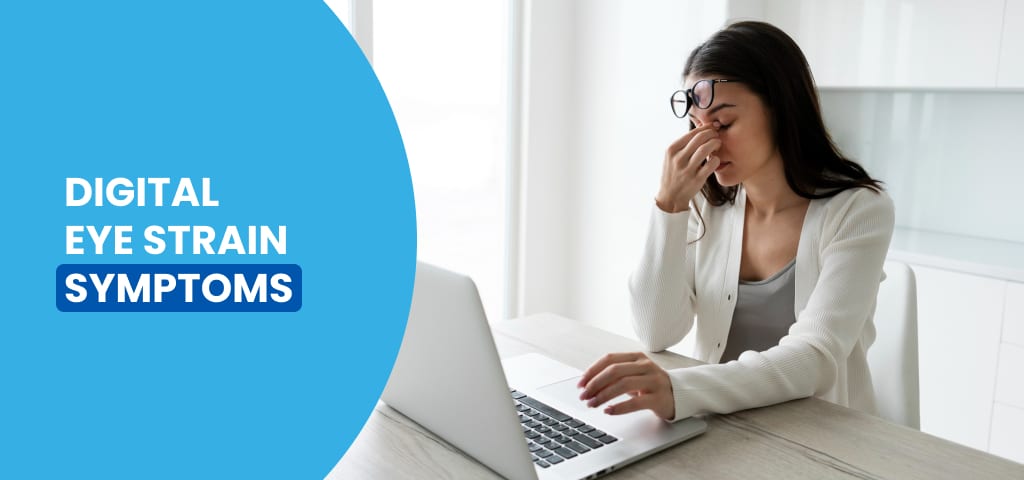
By mid-afternoon, the screen looks slightly blurry. There is a dull ache sitting behind your eyes or across your forehead. You blink a few times, rub your eyes, and tell yourself you just need a good night’s sleep.
You probably do not need more sleep. What you are most likely experiencing are digital eye strain symptoms, and if you spend more than two hours a day looking at a screen, you are in very good company. Research suggests that up to 90 per cent of regular screen users experience some form of visual discomfort, yet most people either do not recognise it for what it is or assume it is something they simply have to put up with.
They do not. Digital eye strain symptoms are well understood, highly treatable, and in many cases entirely preventable. This guide covers what they are, why screens cause them, and what an eye examination at Spectacle Hub can do about them.
The Office Worker Who Thought She Just Needed More Sleep
When a patient at Spectacle Hub first described her symptoms, she had been living with them for the better part of six months. Every afternoon without fail, her vision would go slightly soft around the edges. Her eyes felt gritty and tired. By the time she got home, looking at her phone felt like an effort.
She had tried earlier bedtimes, more water, a new desk lamp, and a blue light filter on her monitor. Nothing made a lasting difference. She had put it all down to stress from a busy period at work and had not considered, even once, that her eyes might be the source of the problem.
When she came in for a comprehensive eye test, we found a mild uncorrected prescription that was completely manageable for most everyday tasks but was causing her eyes to work significantly harder during extended screen use. New glasses with an anti-reflective coating and a small near-work correction resolved her afternoon symptoms within two weeks.
Six months of daily discomfort, fixed in a single appointment. Her case is one of the clearest examples of computer eye strain effects we see: real, persistent, and entirely addressable once properly identified.
What Are Digital Eye Strain Symptoms?
Digital eye strain symptoms are a cluster of visual and physical complaints that develop from prolonged use of digital screens. Phones, computers, tablets, and televisions all contribute, though close-up screens used for focused tasks like reading and writing tend to produce the most noticeable effects.
The most common symptoms include:
- Blurred or fluctuating vision during or after screen use
- Dry, gritty, or irritated eyes
- Headaches, particularly across the forehead or behind the eyes
- Neck, shoulder, or upper back tension
- Difficulty refocusing after looking away from a screen
- Increased sensitivity to light
- Tired or heavy eyes by mid-afternoon
- Double vision after extended close work
If several of these sound familiar, you are not imagining them. They are recognised computer vision syndrome symptoms with a well-documented physiological cause.
Why Screens Cause More Eye Strain Than a Book
Reading a printed page and reading a screen feel similar, but they place very different demands on your visual system. Understanding why helps explain why eye strain from screens is so much more common than eye strain from traditional reading.
Screen text is made up of pixels rather than solid ink. Your eyes have to work continuously to maintain a clear focus on text that is technically never perfectly sharp, no matter how high the resolution. Add to this the contrast fluctuations, glare, and the unnatural viewing angles that come with desk setups, and you have a sustained focusing demand that most visual systems were not designed to handle for eight or more hours a day.
There is also the blink problem. A normal, relaxed blink rate is around fifteen to twenty times per minute. During concentrated screen use, that rate drops to as low as five to seven times per minute. Blinking is how your eyes stay lubricated. When it drops significantly, the tear film across the surface of the eye begins to dry out between blinks, producing the gritty, irritated feeling that is one of the most consistent digital eye strain symptoms across all age groups.
What Makes Some People More Affected Than Others
Not everyone who spends hours at a screen develops significant symptoms. Several factors determine how much eye strain from screens you are likely to experience.
An uncorrected or incorrectly corrected prescription is one of the biggest contributors. If your glasses or contact lens prescription is even slightly out of date, your eyes are compensating every moment they are focused on a screen. A small error that causes no noticeable problems in everyday life can produce significant fatigue over a full day of close digital work.
Age is another factor. As your eyes age, their ability to shift focus between distances becomes less flexible. People in their forties and beyond often notice a sharp increase in computer vision syndrome symptoms as presbyopia begins to develop, even if their distance vision remains sharp.
Screen setup matters too. Glare from windows, screens positioned too high or too close, and poor ambient lighting all increase the demand on your visual system and amplify the computer eye strain effects you experience.
Two More Situations We See Regularly
The office worker story reflects one of the most common presentations. Here are two others.
A teacher who moved to online lessons and started seeing double. After her school shifted to remote learning, her screen hours roughly doubled overnight. Within a few weeks, she was experiencing double vision after about two hours at the computer, along with persistent headaches by mid-morning. She had never had any problems with her eyes before. A comprehensive examination revealed a latent binocular vision issue that her visual system had been compensating for without difficulty under normal conditions. The extended, unbroken screen demands had overwhelmed that compensation. Prism glasses and some adjustments to her screen setup resolved the symptoms significantly within a month.
A Year 10 student whose grades had dipped and who was struggling to concentrate. His parents assumed it was motivation. He assumed it was boredom. When he came in for an eye test, he described headaches that started within an hour of beginning homework, along with words that seemed to blur and shift when he was reading on his tablet. He had adapted to working with one eye effectively closed, a habit his parents had noticed but not connected to his vision. He had significant digital eye strain symptoms driven by an undiagnosed convergence insufficiency. Once identified and treated, his ability to sustain focus for screen-based work improved considerably.
The Takeaway
Screens are not going anywhere, and neither is the demand they place on your eyes. But digital eye strain symptoms are not something you have to accept as part of modern life. In most cases, they have a specific, identifiable cause, and addressing that cause makes a real and lasting difference.
The first step is a comprehensive eye examination that takes your screen habits into account. The eye strain from screens that people carry for months or years often traces back to a prescription that needs updating, a binocular vision issue that has gone undetected, or a lens solution that is not optimised for close digital work. None of these are complicated to address once they are properly identified.
If your afternoons regularly feel like the screen is working against you, that is worth investigating. It is usually a much simpler fix than people expect.
Frequently Asked Questions
What are the most common digital eye strain symptoms?
The most common digital eye strain symptoms include blurred or fluctuating vision, dry or gritty eyes, headaches around the forehead or behind the eyes, difficulty refocusing after screen use, and general visual fatigue by mid to late afternoon. Neck and shoulder tension frequently accompany the eye symptoms due to the postural adjustments people make when their vision becomes uncomfortable.
What is computer vision syndrome?
Computer vision syndrome is the clinical term for the collection of computer vision syndrome symptoms caused by extended digital screen use. It affects an estimated 50 to 90 per cent of regular computer users. The symptoms overlap significantly with general digital eye strain and are caused by the same combination of sustained close focus, reduced blink rate, screen glare, and visual coordination demands.
Can digital eye strain cause permanent damage?
Current evidence does not suggest that eye strain from screens causes permanent damage to the eyes. The symptoms are real and can significantly affect quality of life, but they are functional rather than structural. That said, conditions that contribute to eye strain, such as an uncorrected prescription or an underlying binocular vision problem, can worsen over time if not addressed. Regular eye examinations are the most reliable way to stay ahead of them.
What can I do to reduce eye strain from screens at home?
Practical steps to reduce computer eye strain effects at home include following the 20-20-20 rule (every 20 minutes, look at something 20 feet away for 20 seconds), positioning your screen slightly below eye level and at arm’s length, ensuring your room lighting matches your screen brightness, and using lubricating eye drops if dryness is a persistent issue. These measures help, but they work best alongside an up-to-date prescription and a comprehensive eye examination.
